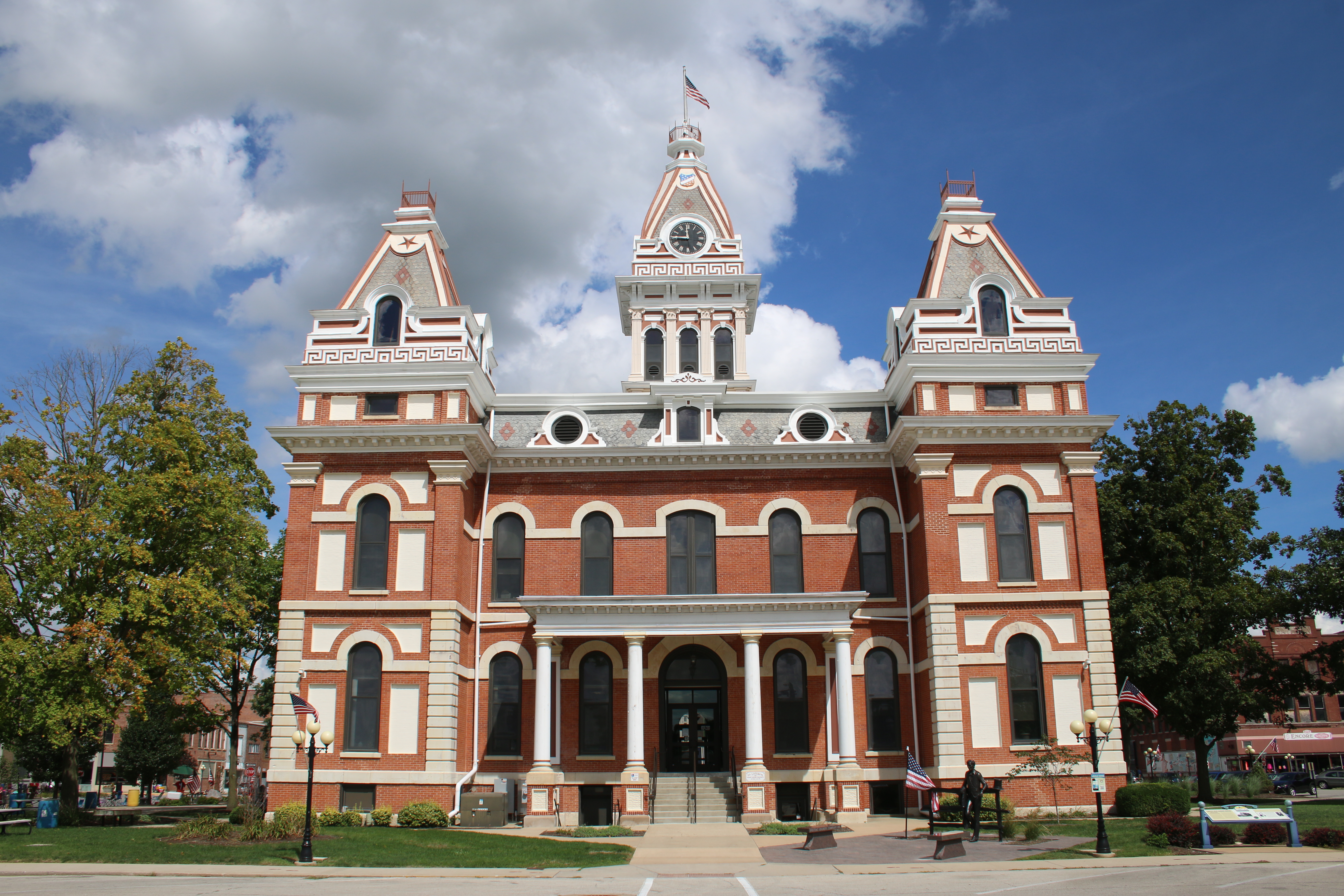


Know Your County Government

Some items may not be available while we work on our new website to be released in July. Please check back.

Site Map

Public Safety Complex Updates

History

County Board

District Map

Member LIsting

2007 Committee Assignments

2007 Schedule of Meetings

Agendas

Minutes

Elected Offices

Circuit Clerk

Clerk & Recorder

Coroner

Sheriff

State's Attorney

Treasurer

Appointed Offices

Assessor

Bookkeeper

Emergency Service & Disaster

Emergency Telephone System

Highway

Human Resources

Maintenance

Nursing Home

Planning Comm.

Probation & Court Services

Public Health

Veterans Assistance Commission

Juror Message

Know Your County Government

Map to Courthouse

Photo Gallery

Registered Sex Offenders

Home

"Know Your County Government" Table of Contents:

ASSESSMENT OFFICE   

CIRCUIT CLERK              

CIRCUIT COURT

CORONER

COUNTY BOARD

COUNTY CLERK & RECORDER 

 COUNTY TREASURER

PROBATION DEPARTMENT

EMERGENCY SERVICES AND DISASTER AGENCY

PUBLIC HEALTH DEPARTMENT

HIGHWAY DEPARTMENT

JURY COMMISSION

LIVINGSTON MANOR NURSING HOME

MAINTENANCE DEPARTMENT

MENTAL HEALTH BOARD

PUBLIC DEFENDER

REGIONAL OFFICE OF EDUCATION

REGIONAL PLANNING COMMISSION

SHERIFF'S DEPARTMENT AND JAIL

SOLID WASTE MANAGEMENT

STATE'S ATTORNEY

VETERANS ASSISTANCE COMMISSION


ASSESSMENT OFFICE

The Supervisor of Assessment’s Office is responsible for maintaining ownership records on all property located in the county.  This is accomplished through reviewing documents recorded in the office of the Livingston County Recorder of Deeds to determine if a property is transferred, partitioned, annexed or detached.  If a property is transferred, the tax rolls are updated to reflect the new owner and billing address.  The mapping company is notified of any partitioned property to create new parcel numbers to correspond with the new legal description(s).  Any annexed or detached parcels must be recorded so that tax rolls can be updated to reflect changes in parcel numbers, legal descriptions, taxing districts, exemptions, and billing addresses.

The Supervisor of Assessments compiles all sales data on properties, which is sent to the State of Illinois Department of Revenue as well as local assessing officials.  By State law, the local assessing officials are to assess residential, commercial and industrial properties at 33 1/3% of its market value as of January 1 of the assessment year.  Farmland assessments are based on the soil’s ability to produce a crop.  These assessed values are certified by the State Technical Advisory Committee each year.  Farm buildings are assessed according to contribution to the farm.

The Supervisor of Assessments is appointed by the County Board for a four-year term.  Duane Kiesewetter has held the position since August of 1979 and is assisted by five full-time deputies.  Fourteen assessors, four township assessors and ten multi-township assessors are elected by the people for four-year terms.  The Supervisor of Assessments must be a Certified Illinois Assessing Official and must maintain that certification with thirty hours of successful class work each year.  In order for the county to be reimbursed one-half of the Supervisor’s salary by the State, the law requires that the residential, commercial, and industrial property must be assessed between 31 1/3% and 35 1/3% level of assessments on average.

The Supervisor has authority to change an individual assessment and to equalize by class and/or township.  Each property owner receives a notice of any individual change in assessed value, which may be appealed to the local Board of Review.  The Livingston County Board of Review consists of a three-member board appointed by the County Board.  All members must successfully complete the Basic Appraisal Course.  The Board meets after the Supervisor of Assessments sends notices of assessment changes for the current assessment year.  The Board has authority to change individual assessments as a result of complaints filed by taxpayers or on their own motion, and is responsible for assessing all property omitted from tax rolls, exempting property from taxation with the approval of Department of Revenue, and insuring that assessments are uniform and equitable within the county.

The Supervisor of Assessments Office administers all real property tax exemptions.  Non-homestead exemptions are for property owned by governmental entities and religious institutions.  The primary authority for approving these exemptions is the Department of Revenue.  Homestead exemptions are for taxpayers who own and live in the property.  The Owner-Occupied exemption is for anyone of any age who owns and lives in the property as of January 1 of the assessment year.  This exemption may be up to $3500 off the assessed value prior to computation of taxes per year.  The Senior Citizens Homestead Exemption is a $2000 deduction from the assessed value prior to the computation of the taxes.  The owner must be 65 years of age or older to qualify.  The Senior Citizens Assessment Freeze Homestead Exemption is for senior citizens who own and live in their home and have a total household income of $40,000 or less.  The Homestead Improvement Exemption exempts the increase in assessed value attributed to an improvement to the residential portion of the property.

The Assessment Office is located at 110 W. Water Street, Suite 2, Pontiac, and the telephone number is 815/844-7214.

CIRCUIT CLERK

The Circuit Clerk’s Office is the administrative and clerical arm of the Circuit Court.  The Circuit Clerk is a non-judicial officer of the Court, elected by the public.  Judy Cremer has served in that position since December of 1980.

The Circuit Clerk maintains records for the entire Court system and is the official recorder of documents for filing and appeals.  Livingston County Court records date from 1837 through the present.  The office serves as a source of data and information for various government agencies and the general public.  In addition, the Circuit Clerk collects all fines, fees, costs and penalties assessed pursuant to state statutes and county board resolutions, and distributes those monies on a monthly basis to the county, state, municipalities and townships.

Records maintained in the criminal division of the office include felonies, misdemeanors, traffic and quasi-criminal matters filed for prosecution in the courts.  The civil division encompasses approximately twelve different types of cases, including all juvenile proceedings, civil domestic violence, dissolution, lawsuits for over and under $50,000, small claims, adoptions, probate and all types of family matters.  Until October of 1999, the Circuit Clerk collected and disbursed payments for child support and alimony.  Because of a federal law, payments made through a withholding order are now sent to a statewide disbursement unit.  The Circuit Clerk’s Office also collects numerous fees for the benefit of other state and county agencies.  In addition to standard fees and fines, the statutes allow collection of funds through filing fees that are used to support specific functions of the office.  These funds allow the Circuit Clerk to maintain records more efficiently and economically through computerization without the expenditure of tax dollars.  Since June of 2000, all court ordered restitution payments are made to the Circuit Clerk’s Office, instead of being collected by Court Services as in the past.

The Circuit Clerk’s mission statement states, “The Circuit Clerk’s Office is committed to serving the citizens of Livingston County and all of the participants in the judicial system in a competent, timely and ethical manner.  All services, information and court records will be provided with courtesy and cost efficiency.”  Cremer is assisted in fulfilling the goals of the office by a staff of nine full-time and two part-time deputies.

The Circuit Clerk’s office is located on the first floor of the Courthouse and can be reached at 815/844-2602.


CIRCUIT COURT

The Circuit Court is under the jurisdiction of the Illinois Court system and is primarily under State control.  Under Illinois law, the county is required to assume responsibility for housing the Court, providing adequate staffing, and funding the operations of the Court system. 

Circuit Judges are elected by the public, and Associate Circuit Judges are appointed by the Circuit Judges of the Judicial Circuit.  Livingston County is in the Eleventh Judicial Circuit, which also includes the Counties of McLean, Woodford, Logan and Ford.  Each county has a Resident Circuit Judge who oversees the court system for that county.  Resident Circuit Judges are elected only by the voters of the county in which they serve.  All other Circuit Judges are elected by the voters of the entire Judicial Circuit.  Associate Circuit Judges are appointed by the Circuit Judges of the Judicial Circuit.

Livingston County’s Resident Circuit Judge is Judge Harold J. Frobish, who was first appointed to that position to fill the vacancy created by the retirement of Judge Charles E. Glennon in July of 1998.  Frobish was then elected as Resident Circuit Judge in the November, 1998 general election.  Prior to his appointment, he had served as Associate Circuit Judge since 1986.  Associate Circuit Judges for Livingston County are Robert M. Travers, who was appointed in July 2003, following the death of Judge Randolph Spires and Jennifer Bauknecht.  Each Judge has a secretary employed by the county.  Court reporters are state employees, whose salaries are paid entirely by the state.

Responsibilities for hearing cases are divided by category among the three Livingston County Judges.  Frobish is responsible for criminal felonies, juvenile abuse and neglect cases, civil suits over $30,000, Miscellaneous Remedy and Chancery cases.  Frank hears cases involving divorce, family matters, small claims, civil suits under $30,000, probate and tax matters, and also coordinates civil marriage ceremonies.  Criminal misdemeanors, traffic and juvenile delinquency cases are heard by Travers.

Circuit Judges are initially elected on a partisan ballot for a six-year term, and then may run for retention for subsequent six-year terms.  On a retention ballot, voters cast a yes or no vote, a 60% affirmative vote being required in order for the Judge to be retained.  Associate Circuit Judges are appointed for four-year terms and may seek re-appointment by the Circuit Judges for subsequent four-year terms.

The Circuit Court offices are located on the second floor of the Courthouse.  The telephone number is 815/844-5172.

CORONER

The Coroner’s Office has served the people of Livingston County continuously since 1838.  The Coroner’s Office is comprised of the Coroner, who is elected by the people to a 4-year term, a part-time Chief Deputy Coroner, a full-time Administrative Deputy Coroner, and seven part-time Deputies.  The Deputies are located throughout the county – Fairbury, Pontiac, Dwight, Flanagan and Long Point – and are paid on a per-call basis.  The present Coroner is Michael P. Burke, who has served in that capacity since his appointment in November of 1991 to replace the late Roger Duffy. 

The Coroner conducts death investigations of individuals in Livingston County who die: suddenly; in a suspicious manner; in public places or at work; without benefit of a doctor’s care; in custody; or because of trauma, mechanical means, or violence.

Investigations are done to protect the rights of the deceased.  They are handled through: onsite investigations; review of medical records; arranging for autopsy by a licensed pathologist; cooperation with law enforcement agencies from the local, state, and federal government; and, at times, through holding inquests and the issuance of death certificates.

One of Burke’s goals has been inventorying and listing Coroner’s records for storage in the Livingston County Building.  Scanning of the records onto CD ROM’s is currently being done to preserve them for history.

The Coroner is a Conservator of the Peace and has the same power as the Sheriff.  By law, the Coroner is bound to care for the Office of the Sheriff in situations where the office becomes vacant by death or where the Sheriff is unable to serve because of a conflict, unless a designated successor has been named.

Education is a major factor in the Coroner’s Office, both in maintaining high standards by continuing education as mandated by Statute for the Coroner and staff, and also by public information programs which are done by request throughout the county.  These programs are provided for public service groups, schools, nursing homes, hospitals, and law enforcement agencies.  In the schools, programs focus mainly on safety issues for driver’s education classes, health classes and student assemblies, and by participation in mock DUI exercises.

One of the most important, as well as the most difficult, responsibilities of the Coroner and staff members is to deliver death notifications to family members and help to provide support and consolation to grieving families.  With respect to the approach of his department in that crucial area, Burke states, “In dealing with each death investigated, our goal is to protect the rights of the deceased and treat the survivors as we would like our families treated in a similar situation.”

The Coroner’s office is located in Pontiac and can be reached at 815/844-6367.


COUNTY BOARD

From 1858 to 1972, the county was governed by a Board of Supervisors, consisting of 32 members from the county’s 30 townships.  Following the 1970 census, the county was divided into four County Board districts, based on population, with seven representatives from each district.  In 2001, following the 2000 Census, the Board was re-apportioned to three districts, and the number of members was reduced to 24, with eight from each district.  Board members are elected to four-year terms, with half running every two years, and all 24 running the second year after each census.  Board members receive compensation for their services in the form of mileage, based on the current rate set by the Internal Revenue Service, and payment for meetings attended.  Members are paid for only one meeting on any given day, regardless of the number of meetings the member attends. 

The County Board Chairman and Vice Chairman are elected by the Board members at an organizational meeting in December of even numbered years.  The terms are two years, and the Board’s Standing Rules allow an individual to serve as Chairman two consecutive terms.  The current Chairman is Bill Flott of Dwight, and Vice Chairman is Jon Goembel of Fairbury.  The Board’s responsibility is to oversee distribution of county funds in an efficient manner, while complying with statutory requirements, and maintaining as many services as possible for the benefit of all county citizens. 

The County Board’s business is conducted through a committee structure, in which committees discuss issues to recommend for full Board approval.  Agriculture and Zoning is responsible for all matters pertaining to the agricultural interests of the county, including eradication of noxious weeds, emergency services, landfill activities and zoning. Election, Rules and Legislation compiles and periodically updates the Standing Rules of the County Board, reviews issues pertaining to holding elections, and informs the Board of pertinent legislation.  The Finance Committee works with the auditor in preparing the annual budget and presents it for Board approval, along with the annual levies.  Insurance and Bond is responsible for all forms of insurance on behalf of the county and supervises and secures the issuance of required bonds for county officials.  The Highway Committee oversees construction and maintenance of all county bridges and highways.  The Nursing Home Committee has general charge and supervision of Livingston Manor and directs the acts of the administrator.  Public Health functions in cooperation with the administrators and the Directors of the Livingston County Tuberculosis, Public Health, Mental Health (708) Boards and the Board for the Care and Treatment of Persons With a Developmental Disability (377).  Public Property has charge of the courthouse, jail, health and education buildings and grounds and all other rented/leased properties.  The Sheriff, Jail and License Committee examines reports the Sheriff is required to file with the Board, reviews issues brought by the Sheriff, and reviews and recommends action on liquor and raffle license applications.  The Personnel Committee meets quarterly with a committee of employees, and otherwise as needed, to review issues and concerns raised by employees, department heads or Board members.  Veterans Assistance meets with the administrator of the Veterans Assistance Commission, audits bills presented, and reviews issues pertaining to assistance for county veterans.  Information Technology is responsible for supervising and coordinating the county’s technology needs.  The Administrative Committee consists of the chairmen of all the other standing committees and coordinates activities of the Board.

The committees meet during the first full week of each month and the County Board meets monthly on the second Thursday after the first Monday.  Since 1999, in an effort to make meetings more accessible to the public and to expand the opportunity for citizens to serve on the Board, the majority of committees meet in late afternoon or evening and Board meetings are held at 6:00 p.m.

The County Board Chairman can be reached through the Board's office in the courthouse, 112 West Madison, 815/844-6378.

 COUNTY CLERK AND RECORDER

In Livingston County, as in the majority of counties in Illinois, the County Clerk also serves as the County Recorder.  The office is currently held by Kristy Masching, who was elected in November of 2004.  She is assisted by six full-time deputies in the Courthouse office and three full-time deputies in the Bookkeeping Department located in the County's Water Street facility.

The County Clerk has a variety of duties.  “We were told at one of the first Clerks Association meetings I attended that, basically, the responsibilities of the County Clerk are everything that is not set by statute as a responsibility of one of the other offices,” said Judith McGlasson (County Clerk 12/98-10/2004).  Some areas are very familiar to the public, such as elections and vital records.  In the vital records division, the Clerk’s Office issues marriage licenses, including at the two correctional centers located in the county, and is responsible for maintaining all birth, death and marriage records that occur in the county.  Marriage records go back to 1837, births to 1856 and deaths to 1878.  In 1916 a state law was passed requiring that records of all births and deaths be filed with the county and establishing a state office where the records are also to be filed.  Prior to that, since many births and deaths occurred at home, the records were often maintained only in family Bibles or church records and are unavailable in the Clerk’s Office.  For the protection of the public, state law is very restrictive as to who may obtain copies of vital records and what records are available for viewing by genealogical searchers. 

The election division has jurisdiction over 52 precincts and is responsible for approximately 24,000 registered voters.  The entire election process is administered by the County Clerk, from voter registration to completion of an election and verifying results to the state.  Schools for election judges are held every two years and are conducted by the Clerk’s office, with occasional non-mandatory refresher courses held in between.  In even numbered years, there are two elections – a primary in March and a general election in November.  Starting in 1999, in odd numbered years, there is a consolidated general election in April and, if necessary, a primary is held in February.  The primary applies only to the Cities of Pontiac and Streator, where candidates for the April ballot are chosen by election rather than caucus. 

The County Clerk works closely with the County Assessor and the Treasurer in the real estate tax process, receiving budgets and levies from approximately 125 taxing bodies in the county, entering data that goes into the calculation of the tax bills, verifying annexations, updating drainage districts, and reporting to the state.  The Clerk also attends the annual tax sale, collects all delinquent and forfeited taxes, and is responsible for reimbursing the tax buyers and reporting their percentage income to the Internal Revenue Service.

Responsibilities of the office not as well known to the public include processing raffle and liquor license applications, and maintaining records of small businesses (assumed names), notaries public, campaign disclosure documents and statements of economic interest.  In addition, the Clerk maintains all records of the County Board and prepares the official proceedings of County Board meetings.  The Clerk also swears in new deputies for county offices.  The Bookkeeping Department is responsible for accounts payable, budget keeping and personnel records for most county departments, and payroll for approximately 350 employees as well as judges of elections and County Board members.

The Recorder is responsible for maintaining the land records of 24,631 parcels of land in Livingston County.  This includes deeds, mortgages, liens, assignments, releases, and plats, as well as corporations, since 1837.  Land records are maintained by tracking indexes and grantor/grantee indexes and, pursuant to state requirements, by microfilming.  Veterans’ discharges are recorded in the office and copies provided upon request, with no recording or copy fees charged to the veteran.  Veterans’ records are available from 1862 to the present.

The main office of the County Clerk and Recorder is located at the Courthouse and can be reached at 815/844-2006.  The Bookkeeping/Payroll Department is located on the second floor of the Pontiac Library.  The telephone number is 815/844-6705.

COUNTY TREASURER

The County Treasurer is elected by the voters for a four-year term. The current Treasurer is Barbara R. Sear, who was elected to her first term in November, 2002.  The staff consists of two full-time deputies.

The County Treasurer, as Ex-Officio County Collector, is responsible for preparation and mailing of tax bills for each parcel of real estate and for each mobile home assessed in the county.  The office is also responsible for collection and distribution of all tax monies to the appropriate taxing authorities.  In order to receive tax money, each taxing entity is required by Illinois law to file financial statements, which are closely monitored.

The Collector also collects and distributes any special assessments filed by drainage districts, prepares a final collection report on all real estate taxes to submit to the State, and sends individual drainage district reports to the State Comptroller.

As a final step in the collection of taxes, judgment is taken and an order for sale entered on all delinquent parcels of real estate.  The County Collector, assisted by the County Clerk, holds a tax sale to finish the collection process.  Property is not sold at the tax sale, but instead qualified, registered agents bid interest amounts to purchase the taxes owed on the property.  When the taxes are redeemed, the tax buyer is reimbursed the amount paid for the taxes plus interest based on the interest amount bid at the sale. 

The County Collector also administers the Senior Citizens Real Estate Tax Deferral Program, which permits qualified senior citizens to defer all or a portion of their real estate taxes.  Approved applications are forwarded to the Illinois Department of Revenue for payment.

The County Treasurer deposits county funds with the intent to maximize interest earnings, and maintains and disburses funds from numerous special purpose accounts established from landfill fees and fees collected by the Circuit Clerk, County Clerk, Sheriff, and other departments.  The office also works closely with the Bookkeeping Department of the County Clerk’s Office in processing bills and keeping the County Board informed of the county’s financial status.

The Treasurer’s Office is located in the Courthouse and can be reached at 815/844-2306.

PROBATION DEPARTMENT

The most familiar function of the Probation Department is to provide probation supervision for adults and juveniles sentenced by the court as a result of criminal charges.  However, the responsibilities of the department go far beyond just that, including programs to reduce criminal activity.  The mission statement of the Livingston County Probation Department states the department’s mission “. . . is to participate as a primary leader in the coordination and implementation of community correctional programs that provide for public protection and prevention of crime and delinquency.  The fundamental purpose of probation services is to aid in reducing the incidence and impact of crime in the community.”

Michael Shaughnessy has served as the Probation Department’s Director since 1972.  His extensive work with the youth of the county, both through the services of the office and in civic activities, earned him the 1998 award as the Pontiac Rotary Club’s Citizen of the Year.  Shaughnessy’s current staff consists of eleven probation officers, all of whom handle both adult and juvenile cases.  The salaries of all probation officers are reimbursed at least in part by state grants and subsidies.  In addition there are two clerical staff positions, and services of interns are used when available from local colleges.

When ordered to do so, the Probation Department aids the courts in determining appropriate sentencing by means of pre-sentence reports.   These reports provide the courts with valuable information that includes the individual’s family situation, prior criminal activity, employment status, victim’s loss, and whether there is potential risk or endangerment to society if the individual is not sentenced to confinement.

Once an individual, adult or juvenile, is sentenced to any form of probation, it becomes the responsibility of the Probation Department to monitor and work with the individual and report to the court regarding status when requested. Equal consideration is given in the process to the victim of a criminal offense.  Defendants may be referred to agencies such as the Institute for Human Resources or Catholic Social Services for counseling to help avoid repetition of criminal activity by helping the individual to understand the impact of their crime, develop empathy for the victim, and to motivate them to do all they can to restore the victim of their crime.

The juvenile intake program is an important aspect of the office, providing an opportunity to work with juveniles through informal supervision, without going through the court process.  All contacts with local law enforcement that might result in a juvenile petition are screened by a Juvenile Intake Officer for possible diversion from the Juvenile Court.  The intake officer contacts school officials, checks the minor’s past police contacts, discusses possible informal supervision with the victim(s), and then forwards a recommended plan to the Assistant State’s Attorney handling juvenile cases.  The informal supervision includes all the specific restrictions normally imposed by the Juvenile Court Judge, as well as double the amount of community service the court would be likely to order.  Secure detention can only be ordered by the Court and is the only restriction not available under informal supervision.

The Probation Department is located at 119 ½ North Mill.  The telephone number is 815/844-5177.

EMERGENCY SERVICES AND DISASTER AGENCY

Charles Schopp serves as administrator of the Livingston County Emergency Services and Disaster Agency (ESDA).  The purpose of the agency is to assist in coordination of functions as may be necessary to prevent, minimize, repair and alleviate injury and damage resulting from any natural or technological cause.  In the event of a disaster, this agency would work as a liaison between the Illinois Emergency Management Agency and local emergency management organizations in coordinating a disaster response and recovery operation.

One of the phases of emergency management is mitigation, and one of the primary mitigation activities in Livingston County is the controlled development of the unincorporated areas that are flood prone to help alleviate damage to property when a flood disaster occurs.  A second phase is preparedness, which can be described as programs or systems that exist prior to an emergency that can enhance response to an emergency or disaster.  An example of preparedness that can especially be of assistance during a personal or family emergency is the Livingston County Rural 911 Addressing System.  This system assists local emergency response providers in responding to needs of the county’s rural citizens.

Unless we see or hear about disasters unfolding through the media, or are personally involved in a disaster, we give them little thought.  However, it is important to know what to do before, during and after a disaster to reduce fear, anxiety, damage, injury and death.  Livingston County ESDA has information available to assist in preparing for fires, floods, tornadoes and winter storms.

Information about ESDA may be obtained at the Regional Planning Commission office at 110 W. Water St., Suite 3, Pontiac, phone 815/844-7741.

 PUBLIC HEALTH DEPARTMENT

 The Public Health Department was established by resolution in June of 1966 and approved by popular vote through a county referendum in November of 1976.  The Livingston County Health Department has been awarded full certification by the Illinois Department of Public Health and Medicare certification for operation of a home health agency.

The Livingston County Board of Health, which oversees activities of the Health Department, is a board of eight members appointed by the County Board to serve three-year terms, who are eligible to be re-appointed at the expiration of their terms.  The Health Department Administrator is hired by the Board of Health.  The current Administrator is MaLinda Hillman, who was appointed to the position in 1996, after being employed with the department since 1980.  The department employs approximately fifty employees to carry out the programs and to provide administrative support.

Programs offered by the Health Department are designed to provide educational, preventative, and healthcare services for eligible citizens of all ages.

 Programs available under Maternal/Child Health include: WIC (nutritional program for pregnant, breast-feeding women and children under the age of five); Family Case Management (assessment, referral, teaching and advocacy for pregnant women, infants); Healthy Families (intensive home visiting program concentrating on parenting skills for infants); Family Planning, Pontiac Township High School Based Health Center, school nursing, vision and hearing screening, immunizations, lead screening, dental sealants, health education, and home health.

The Chronic Disease Division includes: Medicare certified home health care, public health nursing, sliding scale homemaker services, nursing home prescreens, community care assessments for homemaker services, wellness clinics, adult immunizations, and health education.

The Environmental Health division of the department provides services in the areas of: restaurant and temporary food stand inspections, and certified food handler classes; issuing permits and providing assessments and consultations for septic systems and well water; conducting sanitary surveys prior to real estate transactions; and inspection of tanning beds for compliance with state regulations.

The Animal Control division enforces the Livingston County Animal Control Ordinance and maintains dog registrations.

Operating funds for the Health Department are obtained from federal, state and private grants, home health services, fees, contracts, donations and the tax levy.  The total Health Department budget is approximately $1,500,000, of which only 10% comes from local tax dollars. 

Many of the Health Department programs have specific eligibility guidelines, and the public is urged to call (815) 844-7174 for each program’s criteria.  The Health Department offices are located in the Health and Education Building at 310 East Torrance Avenue.

 HIGHWAY DEPARTMENT

The County Highway Department maintains 257 miles of highway within Livingston County.  County highways are generally classified as collector highways that collect traffic from the rural local road system for travel between the population centers around the county. 

In addition to county roads, the department provides engineering assistance and administers township motor fuel tax funds for the thirty road districts in the county.  Fees for engineering services are charged to the road districts at a rate of 4% of the final construction or maintenance costs.  Each road district has an elected commissioner of highways who is responsible for the township roads.  Livingston County is the fourth largest county in Illinois with 1,043 square miles but ranks number one in the state for total road district mileage with 1,612 miles.

The county has 73 bridges and the road districts have 381 bridges over 20 feet in length for which the highway department has inventory and biennial inspection responsibilities.  The department also supervises the design, repair and replacement of bridges when necessary.  Drainage studies and design for numerous smaller structures on the county and road district highway system are also responsibilities of the county department.

The Highway Department is administered by the County Engineer, who is appointed by the County Board for a term of six years and works with the County Board Highway Committee in developing road and bridge improvement plans.  David Winters was appointed County Engineer April 12, 1995, after being employed with the department since 1976.  The County Engineer is required by law to be a licensed professional engineer with sufficient highway engineering and administrative experience and must pass an Illinois Department of Transportation examination which tests knowledge of pertinent statutes and administrative policy.  The County Engineer is also a non-voting member of the Livingston County Regional Planning Commission.  In that capacity he reviews proposed subdivision road plans for conformity with the county’s subdivision ordinance and coordinates acceptance of rural subdivision streets with the road district commissioners.

The department is comprised of two sections: engineering/administrative and maintenance.  Funding for the department’s operations comes from three local property tax levies, as well as state and federal funds.  The department also competes for additional funds through special program grants administered by the Illinois Department of Transportation.

The County Highway Department cooperates with the township road districts, cities, towns, and villages in the county primarily through joint purchasing, equipment rental, and joint bridge projects.  The Highway Department is located at 1705 South Manlove, Pontiac, and can be reached at 815/842-1184.

JURY COMMISSION

One of the fundamental rights of all Americans is to be judged by a jury of their peers, whether in determining guilt or innocence in response to criminal charges or the prevailing side of a civil lawsuit.  The function of the Jury Commission is to see that jurors are chosen in a fair, impartial manner.

The Jury Commission consists of an Administrative Clerk, three Commissioners appointed for three-year rotating terms by the Circuit Judges, and staff necessary to perform the duties of the Commission.  Jane Squier presently serves as Administrative Clerk for the Commission.  The Administrative Clerk prepares and mails the jury summons and provides juror assistance and information. 

Livingston County Courts hold five, two-week jury calendars per year.  Jurors’ names are chosen at random from a list of registered county voters and a driver’s license list from the State of Illinois, which are incorporated into and drawn from a computer program after duplicates are removed.

The process for selection of jurors is strictly regulated by state statute to assure fairness in the courts.  The jury summons is a legal document that requires the juror’s appearance. 

The Jury Commission is located at 110 W. Water St., Suite 3, Pontiac, and can be reached by phone at 815/844-7834.

LIVINGSTON MANOR NURSING HOME

The need for Livingston County to have a nursing home to care for needy citizens of the county was determined in 1859.  The home opened in 1860 and was located on 240 acres of land purchased by the county, with the land being farmed to support the home.  Over the years, several buildings were added, and in 1896 a T-shaped, three-story brick building was constructed.  An extensive expansion project began in the 1950’s and was completed in 1965 with construction of the present facility.  The project required demolition of numerous buildings, culminating with the stately old brick building in 1970.

Livingston Manor is now a 122 bed, skilled care nursing facility, certified for both Medicare and Medicaid, and capable of meeting all needs of the residents.  The facility offers services to those individuals needing long-term care, as well as those needing to be rehabilitated in order to return home.  The nursing home is a non-mandated service provided by the county to meet the needs of county residents.  It is operated similarly to a private not-for-profit organization, with the intent being that it generate enough revenue to meet its expenses. 

The admission policy of the nursing home is to admit and to treat all residents without regard to race, color, ethnic group, age, gender or disability.  Its purpose is to provide necessary health care needs on a holistic approach to assist residents in maintaining their maximum level of functioning.  These goals are accomplished in a home-like atmosphere with professionals who are specifically trained in all areas of nursing, rehabilitation, social services, dietary services, activity services, and personal care especially needed for the aging population.  Additional support is provided through departments such as laundry, housekeeping, maintenance, safety, and administration.

The Livingston Manor Administrator is appointed by the County Board.  LeAnn Thomas is currently acting as interim administrator. The home employs over 125 people in all departments, who receive ongoing training and education.

Livingston Manor is located at 14335 US Highway 66.  The telephone number is 815/844-5121.

MAINTENANCE DEPARTMENT

Don Tuley has served as supervisor of the Maintenance Department since June 2004.  The department employs three maintenance workers and four housekeeping custodians.  Two custodians take care of cleaning at the courthouse, Probation and offices located at the Pontiac Library, and two attend to the Highway Department and Health and Education buildings.

The County Board Public Property Committee meets monthly with Tuley and authorizes any projects to be conducted by the department.  The maintenance workers are responsible for upkeep of the courthouse and all county-owned properties and, on request for special projects, Livingston Manor Nursing Home.  Livingston County is fortunate to have the services of maintenance employees in the department who are able to take care of almost all of the upkeep of county buildings, including electrical, plumbing, heating, air conditioning and grounds work.  In addition, their woodworking skills have provided a remodeled courtroom for Judge Spires, a courthouse security station, coordinator’s office, replacing the porch and steps at the Health and Education Building, and numerous smaller projects in various offices.  The talents of the employees have resulted in considerable savings to the county by reducing the need to hire outside contractors.

 MENTAL HEALTH BOARD

 In 1968, the voters of Livingston County passed a referendum to  “establish and maintain community mental health facilities and services including facilities and services for the developmentally disabled and the substance abuser and levy therefore an annual tax not to exceed .15%.”  The Livingston County Mental Health Board is appointed by the County Board to administer the funds and monitor the services provided by the agencies receiving funds from the department.  In accordance with the Mental Health Act, the County Board appoints one of their members to serve on the Mental Health Board.  The Mental Health Board consists of seven members who are appointed to serve three-year terms and are eligible to be re-appointed at the expiration of their terms.  The Board meets on the third Thursday of each month.  The officers are elected at the annual meeting in June. 

The Mental Health Board is the Case Coordination Unit and the Pre-admission Screening Agent for the county and serves developmentally disabled children and adults.  The Board also administers the programs of the Livingston County Commission on Children and Youth and writes the grant proposals, which provide funding for the services.  The services in both areas are funded only by federal and state sources.

The Livingston County Board for the Care and Treatment of Persons with a Developmental Disability also is appointed by the County Board and funds services for persons with developmental disabilities through the programs administered by the Mental Health Board.

Services provided by the Mental Health Board through the Institute for Human Resources include: outpatient counseling, emergency intervention, medication, and aftercare, with a goal of treating clients before problems become severe and to keep the client out of state mental hospitals; counseling, outreach, hospitalization visits, and aftercare for severely disturbed children; group counseling, leisure activities, recreation, and survival skills training for seriously mentally ill clients; intensive contact with clients suffering from serious and chronic mental illness and discharges from state hospitals, to deflect unnecessary hospitalization, while improving their quality of life in the community; 24-hour crisis response availability; counseling for alcoholics/substance abusers and their families; prevention services for alcohol/drug abuse, AIDS, child abuse, and stress, as well as parenting classes and support groups for parents of hyperactive children and children with disabilities; and independent living for chronically mentally ill clients, who are assisted with shopping and homemaking skills.

Futures Unlimited, Inc., a sheltered workshop for developmentally disabled clients, also receives funding from the Mental Health Board and services include: job placement in the community, supported employment in the community, developmental training, vocational development, facility-based employment, community living support services, and respite support services to give support and relief to families and caregivers by providing temporary, time-limited care and assistance for persons with developmental disabilities.

Both IHR and Futures Unlimited receive major funding from federal and state sources.

Additional funding is provided by the Mental Health Board for services provided by Alternatives to Domestic Violence and Sexual Assault Services, which offers a supportive environment for persons wanting to free themselves from the effects of violence, and Operation Snowball, which focuses on educating youth about the negative effects of using alcohol, tobacco and illegal drugs, while providing programs to teach responsible use of free time and organizational skills.

The Executive Director of the Mental Health Board is Carol Flessner, who is hired by the Mental Health Board and has held the position since 1989. 

The Mental Health Board offices are located in the Health and Education Building at 310 East Torrance and can be reached at 815/844-7708.

PUBLIC DEFENDER

 The Public Defender is appointed by the Circuit Court Judges of the Eleventh Judicial Circuit in which the county is located and serves at the direction of the appointing judges. 

The Public Defender must be an attorney licensed in the State of Illinois, and may also be engaged in private practice.  The Public Defender’s main responsibility is to represent and defend indigent persons who are charged with criminal offenses.  The presiding judge in a case determines whether a Public Defender should be assigned to a case.  The Public Defender also is often appointed to represent correctional center inmates in miscellaneous remedy cases (civil suits) brought by the inmates.  In addition to representation of adults, the Public Defender is frequently appointed to represent juveniles alleged to be abused, neglected, dependent or delinquent.

Although salaries of the Public Defenders are paid by the county, indigent defendants are frequently ordered by the presiding judge to reimburse the county for legal fees based on the defendant’s ability to pay.

 REGIONAL OFFICE OF EDUCATION

The DeWitt, Livingston, McLean Regional Office of Education ser

ves as a liaison between local school districts and the Illinois State Board of Education.  Twenty-four public school districts are served in addition to the non-public schools in the region.  The office is staffed by an elected Regional Superintendent, Larry Daghe, who assumed the position in July, 2003, and an appointed assistant as well as consultants and support staff.  Livingston County merged into a regional office with Dewitt and McLean in 1995.


The regional office is responsible for the proper registration and certification of all teachers and administrators in the region.  Truancy referrals from the school districts and visits to all buildings for life safety inspections are required by the State.  Compliance visits to monitor curriculum, graduation requirements, proper teacher assignments, immunization records, and criminal background reviews are also monitored by the Regional Office of Education.


The office sponsors staff development workshops in the areas of math, reading, social studies, science, and violence prevention to assist our classroom teachers.  Continuing education is required for administrators who attend workshops and obtain credit from the Regional Office.  Technology assistance training, gifted education, regular education initiative, scientific literacy and quality review are also services provided to students and teachers.


The Regional Office of Education administers the Regional Alternative School program.  The students range from grades seven through twelve.  The school heavily emphasizes vocational education and education for employment.  All required courses for high school completion are offered.  A Safe Schools program has been successfully operating since 1997 and is included as a component of the alternative school.  Called the SAVE program, the safe school program has given an option to students who have been suspended or expelled from public schools.


The Livingston County Alternative School provides instruction for the completion of the GED and remedial reading.  Career choice counseling is offered to students interested in the trades, college or the armed forces.  The DeWitt/Livingston/McLean Regional Office is also a designated GED testing center that enables those who have not graduated from high school to take an examination to qualify for an equivalency certificate.  The GED instructional program provides instruction to adult students preparing to test.


Expenditure reports, financial claims and applications for funds are processed through the Regional Office for approximately 35 schools and agencies.  Money due local school districts from the state and federal governments is disbursed through the Regional Office of Education to the approved treasurers and agencies.


A directory which lists public, private and parochial schools, including phone numbers and addresses, is published yearly, as is a statistical directory which lists salaries of school personnel, tax rates, equalized assessed valuation, per capita tuition, and enrollments by district.


The Regional Office works in conjunction with the Illinois State Board of Education’s legal department to assist both school personnel as well as private citizens with legal questions and concerns.  The office is also responsible for legal procedures including assisting in school district reorganization, teacher strike issues, and annexation/detachment hearings.


The Regional Office of Education is located at 905 North Main Street, Suite #1, Normal, IL, 61761.  The telephone number is 309/888-5120.

REGIONAL PLANNING COMMISSION

Land use control administration is a complex responsibility of county government.  The control of land use in the unincorporated areas of the county is administered through the Livingston County Regional Planning Commission Office.  Charles Schopp has served as zoning administrator since being appointed by the County Board in 1983.  The office administers the traditional major land use controls through zoning and subdivision regulations.  Zoning is a term applied to regulations that prescribe the manner in which land within the jurisdictional limits of the governing body may be used or developed.  Comprehensive land use plans, along with zoning and subdivision regulations, define permitted uses of land and buildings as well as the intensity of which land may be developed.

The Regional Planning Commission consists of fifteen members who are appointed by the County Board for a four-year term.  Two members of the commission are members of the County Board.  Meetings of the Commission are open to the public and are held on the first Monday of each month, at 7:00 p.m. at the Livingston County Courthouse.

Communication is key in enhancing the land development process.  To begin this communications process the zoning administrator requests that the property developer provide the names and addresses of the owner of the property which is to be developed and the party who is developing the property, the legal description and a plot plan of the property being developed, and a description of the proposed development.  Some property development proposals, including a change in use of the property, may have some unique circumstances that may require the approval of a variation to the property development requirements, approval of a special use, approval of a subdivision of property, or approval of a zoning district classification amendment.  The Planning Commission can discuss these types of land use development regulations as they may apply to individual situations.

As well as providing information that property owners or developers may request, the Planning Commission office maintains the communications process by listening to proposals in an effort to make the land use regulation process as easy as possible.

The Regional Planning Commission office is located at 110 W. Water St., Suite 3, Pontiac, and the telephone number is 815/844-7741.

 SHERIFF’S DEPARTMENT AND JAIL

The Sheriff is an elected official, serving in a full-time capacity, and is the county’s chief law enforcement officer.  The position is presently held by Robert C. McCarty, who was elected to his first term in 2002.  The department is responsible for crime prevention and control in areas of the county which are not served by their own law enforcement agency.  The department also operates the county jail, in addition to serving summonses, executing court judgments, conducting criminal investigations, providing continual training and education for personnel, and performing the numerous functions required by Illinois Statutes.

Included in the Livingston County Sheriff’s Department’s statement of goals and objectives is the statement, “We, the Men and Women of the Livingston County Sheriff’s Police, are dedicated to the service and protection of the citizens of Livingston County.” The department’s services are performed by 29 sworn police officers, 19 correctional officers, 1 office manager, 3 secretaries, 4 court security officers and a jail superintendent.  There are 22 deputies assigned to the patrol division, with 5 officers assigned to contracted town patrol for Chatsworth, Forrest, Flanagan, Reading-Newtown Townships, and Saunemin-Cullom-Odell.

The Sheriff also is responsible for providing security for the Courthouse, notifying departments and the public of holidays set by the County Board for county offices to be closed, and determining necessity of closing the Courthouse in the event of emergencies such as extreme weather conditions.

The business office of the Sheriff’s Department is located in the Public Safety Complex, 844 W. Lincoln St., Pontiac and can be reached at 815/844-2774.

SOLID WASTE MANAGEMENT

The Livingston County Solid Waste Management Plan was developed and approved by the Livingston County Board in 1994, and updated in 1999 and 2002.  This plan analyzes and recommends long term waste management systems in Livingston County by addressing issues involving management of household wastes, waste reduction, recycling, reuse, landscape waste management, incineration, transfer stations, and the landfilling of waste.  

Under Charles Schopp’s supervision, the Solid Waste Management Office evaluates the need for and type of programs available and feasible, both technically and economically, for recycling or reducing the amount of waste generated in the county.  The office assists in evaluating and administering the Siting Ordinance, which applies to the siting of landfills or landfill expansions.  The Siting Ordinance explains the manner in which Livingston County will evaluate new landfill area proposals.  The Solid Waste Management Plan references the host agreements that the County Board has negotiated with the Streator Area Landfill and the Livingston Landfill near Pontiac.  The host agreements provide for long term disposal of waste generated within Livingston County, which is a valuable asset for the citizens of the county.

The Solid Waste Management office is located in the Regional Planning Commission office at 110 W. Water St., Suite 3, Pontiac, and the telephone number is 815/844-7741.

 STATE’S ATTORNEY

In addition to the most familiar responsibility of the State’s Attorney’s Office, prosecution of criminal matters, the office also serves as legal counsel to the county government in civil matters.  In that capacity, the State’s Attorney provides legal advice to all elected and appointed county officials and the County Board on matters of official business, prosecutes civil actions brought by county officials in their official capacity, and defends all actions brought against the county, county officials or county employees in their official capacity.

The office of Livingston County State’s Attorney is a full-time position, elected for four-year terms.  The office holder may not maintain a private law practice, and the office may not represent private citizens in civil matters.  Thomas J. Brown presently serves as Livingston County State’s Attorney.  Brown was appointed as an Assistant State’s Attorney in 1982 by former State’s Attorney Donald D. Bernardi.   He was appointed State’s Attorney by the County Board in 1991, when Bernardi was appointed Associate Circuit Judge.

Staff of the State’s Attorney’s Office consists of 3 full-time assistants, 4 secretaries, a part-time investigator, and a Victim Witness Coordinator, who processes requests for orders of protection and addresses the needs and rights of victims of criminal offenses.

The State’s Attorney’s Office is located at the Courthouse and the phone number is 815/844-5169.

VETERANS ASSISTANCE COMMISSION

There are presently approximately 4000 veterans in Livingston County.  The Livingston County Veterans Assistance Commission, formed by the County Board in 1989 at the request of county veterans organizations, is operated by and for veterans.  The agency is funded by county funds, pursuant to Illinois statutes, to provide aid to indigent veterans and their families who qualify for and need assistance that may not be available from other agencies.

Tom Bailey presently serves as Superintendent of the Commission since April, 2005.  The Superintendent and Commission officers meet monthly with representatives of the veterans posts from throughout the county and review requests submitted from the posts.

To qualify for assistance, an individual must be an honorably discharged veteran, a resident of Livingston County, and meet specific income requirements.  Veterans are assisted with obtaining medical treatment at VA hospitals, pensions, compensation benefits, burial allowance, document processing, food, rent, employment, transportation to medical appointments, gas for personal vehicles when needed for medical appointments or travel for employment up to the first paycheck, utilities, and life skills.  The agency also works closely with other service agencies who, at times, will share cost of assistance to veterans.

The Veterans Assistance office is located at 107 W. Water St, and the telephone number is 815/844-7378.

Return to Top

"...serving the people of Livingston County"